
"bean saint"
1000 article(s) found

Costa Rican Coffee Bean production area Information introduction Flavor description Saint Roman single bean variety
For professional baristas, follow the Coffee Workshop (official Wechat account cafe_style) CENTRAL VALLEY Central Valley, the capital of Costa Rica, San Jose, which is the most densely populated area. It is also an area that has been growing coffee for the longest time. It is usually divided into subregions of San Jose San Jos Heredia and Alajuela.

Differences, distinctions and prizes of single beans at Chateau Saint Roman, Costa Rica
For the exchange of professional baristas, please pay attention to the coffee workshop (Wechat official account cafe_style). The difference, distinction and award of individual beans in Costa Rica Saint Roman Manor Royal Coffee Costa Rica San Ramon Royal Coffee country: Costa Rica Grade: SHB altitude: 1700m production area: Tara Zhu production area roasting degree: medium depth

Introduction to the Historical processing method of Variety planting Information Development in Saint Roman Manor
Professional barista communication please follow coffee workshop (Wechat official account cafe_style) altitude: 1200-1900m harvest: November March Costa Rica San Ruman processing Plant Coffee production area: Tarrazu Coffee Variety: Caturra.Catuai Annual rainfall: 2000 mm grading Standard: SHB Annual average temperature: 19 degrees C treatment: washing raw beans specifications: 17-18 mesh planting altitude
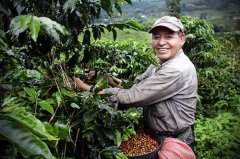
Costa Rican Saint Roman washing Plant Coffee, cooked beans, Royal Coffee fresh order for self-baking
The best coffee in Costa Rica seems to come from small processing plants, spread across several major coffee producing areas, including Tarazu and the western valley. This so-called coffee revolution originated 15 years ago and has greatly changed the way bean baking experts and importers think about Costa Rican coffee. Take the processing plant as the center, collect coffee beans from the surrounding small farms for processing, most of these farms are small societies

Special hard beans Coffee Flavor of Saint Roman Manor in Costa Rica describes the price characteristics of varieties in producing areas
Costa Rican coffee has full particles, ideal acidity and unique strong flavor. Costa Rica's coffee industry, originally controlled by the Costa Rican Coffee Industry Company (InstitutodelCafdeCostaRica, ICAFE), has been taken over by the official Coffee Committee (OficinadelCaf). In the coffee exported, those products that are considered to be of substandard quality use blue.

Costa Rican Saint Roman Coffee Flavor description Grinding characteristics Variety production area Taste Brand introduction
Located in the fertile hills of the Poas volcano in the central valley of Costa Rica, Fenghuang Manor is the first producer in Central and South America to produce honey-treated and sun-cured coffee. It is a completely 100% organically grown coffee manor. The owner believes that organic farming is a better choice for environmental maintenance and family health, even in the face of many technical and organizational

Honduran coffee beans, introduced by the processing plant in Saint Vincent, Honduras.
Professional coffee knowledge exchange more coffee bean information Please follow Coffee Workshop (Wechat official account cafe_style) Coffee was grown in Honduras in 1804. Now there are 280000 hectares of coffee plantations, mainly small coffee farmers, whose planting area is mostly less than 3.5ha. These small coffee farmers account for 60% of Hongguo's coffee production. In 2011, Honduran coffee

Introduction to the method of grinding scale and taste treatment of coffee beans in Saint Roman Manor, Costa Rica
The research center, located about 30 kilometers northeast of the Costa Rican capital San Jose, belongs to the Costa Rican Coffee Association and is a research institution for villa sarchi planting, breeding and quality inspection newly developed by Costa Rica's national coffee breeds. in addition, it also has 10 hectares of experimental plots, planting a number of excellent varieties. Coffee is the main agricultural product in Costa Rica, with an annual output of more than 2 million bags

Description of Coffee Flavor of Costa Rica Saint Roman Manor with extra hard beans at High altitude
The research center, located about 30 kilometers northeast of the Costa Rican capital San Jose, belongs to the Costa Rican Coffee Association and is a research institution for villa sarchi planting, breeding and quality inspection newly developed by Costa Rica's national coffee breeds. in addition, it also has 10 hectares of experimental plots, planting a number of excellent varieties. Coffee is the main agricultural product in Costa Rica, with an annual output of more than 2 million bags

Description of Flavor of Fine Coffee beans in Coffee Variety producing area of Saint Roman Manor, Costa Rica
Other kinds of Brazilian coffee, such as Rio and Parana, can be produced in large quantities because they do not need too much care. Although the taste is rough, it is a kind of good and cheap coffee. It has its own standard because it is distributed all over the country and its solid quality varies. It has its own standard (NO.2~NO.8 according to the number of sundries, NO.13~NO.19 according to the size of beans, and six grades according to taste).

Introduction to the taste characteristics of coffee beans by describing the flavor of coffee beans in the Manor of Saint-Tuareo, Colombia
Colombian San Tuareo Manor Coffee is so popular in Colombia that it has become indispensable writing material for writers like Garcia M á rquez. For example, coffee is mentioned in every chapter of "one hundred years of Solitude", which won him the Nobel Prize for literature. Chapter V someone went to the bride in order to obstruct the wedding of the protagonist Colonel Aureliano Buendia.

Treatment of single bean coffee beans in Saint Roman Manor, Costa Rica planting variety producing areas
Professional barista communication please pay attention to the coffee workshop (Wechat official account cafe_style) St. Roman processing plant, the use of water washing treatment, to taste strong, rich, taste of coffee famous, coffee cherries hand-selected, coffee farmers remove overripe or immature cherries, and then production processing, use 3 disc Aagarrde peeling machine to remove the skin and pulp, and then

Description of Coffee Flavor in Chateau Saint-Roman, Costa Rica, characteristics of Grinding degree, introduction of Fine Coffee in producing areas
Excellent Costa Rican coffee is called extra hard beans, and this kind of coffee can grow at an altitude of more than 1500 meters. Altitude has always been a problem for coffee growers. The higher the altitude, the better the coffee beans, not only because the higher altitude can increase the acidity of the coffee beans and thus increase the flavor, but also because the night temperature at the higher altitude is lower, which can make the trees grow slowly.

Description of planting area for single bean flavor of Chateau Saint Roman, Costa Rica
For the exchange of professional baristas, please follow the coffee workshop (Wechat official account cafe_style) Tarrazu producing area has a long-standing reputation guarantee, for many years the coffee from here can almost be regarded as a high quality grade. But the coffee comes from different farms and is then mixed into large batches. However, over the years, Tarrazu's brand has accumulated sufficient strength to produce from outside the region.

Introduction of Coffee Flavor description and Grinding degree characteristics of Coffee in Saint Roman Manor, Costa Rica with good sweetness
Coffee was introduced into Costa Rica from Cuba in 1729. Today, its coffee industry is one of the well-organized industries in the world, with a yield of 1700 kg per hectare. Costa Rica has only 3.5 million people but 400m coffee trees, and coffee exports account for 25 per cent of the country's total exports. The volcanic soil of Costa Rica is very fertile and well drained, especially in the central part.

Introduction to the characteristics of Coffee Flavor description Variety Grinding degree in Saint Roman Manor, Costa Rica
Tarasu, located in the south of the country's capital, SanJos, is one of the most valued coffee growers in the country. LaMinitaTarrazu coffee is a famous local product, but its production is limited, about 72600 kilograms a year. It is grown on a piece of land called LaMinita, which is close to the McAlpine family in the UK.

Isopiaga Coffee Bean Flavor introduction to Zege's' Holy Coffee'
The sacred coffee Zege is a small peninsula on the edge of Lake Lake Tana. In the past decade, the problem of deforestation has been serious, but the rainforest on the Zege Peninsula has been spared. The reason is rumored to be related to a legend. It is said that the saint Betre Maryam divided his walking stick into three here, while the top part fell to form the first coffee tree in the Zege area.

Costa Rican Saint Roman Coffee Flavor description Taste characteristics introduction of Fine Coffee in producing areas
Costa Rican coffee has full particles, ideal acidity and unique strong flavor. Costa Rica's coffee industry, originally controlled by the Costa Rican Coffee Industry Company (InstitutodelCafdeCostaRica, ICAFE), has been taken over by the official Coffee Committee (OficinadelCaf). In exported coffee, those products that are considered to be of substandard quality are used in blue.

Coffee Flavor characteristics and Origin Information of Saint Vincent processing Plant in Honduras, the largest coffee producer in Central America
For the exchange of professional baristas, please follow the coffee workshop (official Wechat account cafe_style) Product name: San Vincent processing Plant, Honduras Flower Mero small Farmer washing (Honduras San Vicente Juan Contreras Miraflores) production area: Santa Barbara (Santa Barbara) Pena Blanca small town processing plant: St. Vincent processing Plant (Beneficio San)

Introduction to the characteristics of Flavor and Taste of Coffee Manor in Saint Roman, Costa Rica
Coffee was introduced into Costa Rica from Cuba in 1729. Today, its coffee industry is one of the well-organized industries in the world, with a yield of 1700 kg per hectare. Costa Rica has only 3.5 million people but 400m coffee trees, and coffee exports account for 25 per cent of the country's total exports. The volcanic soil of Costa Rica is very fertile and well drained, especially in the central part.